
Featured Publications
-
![]()
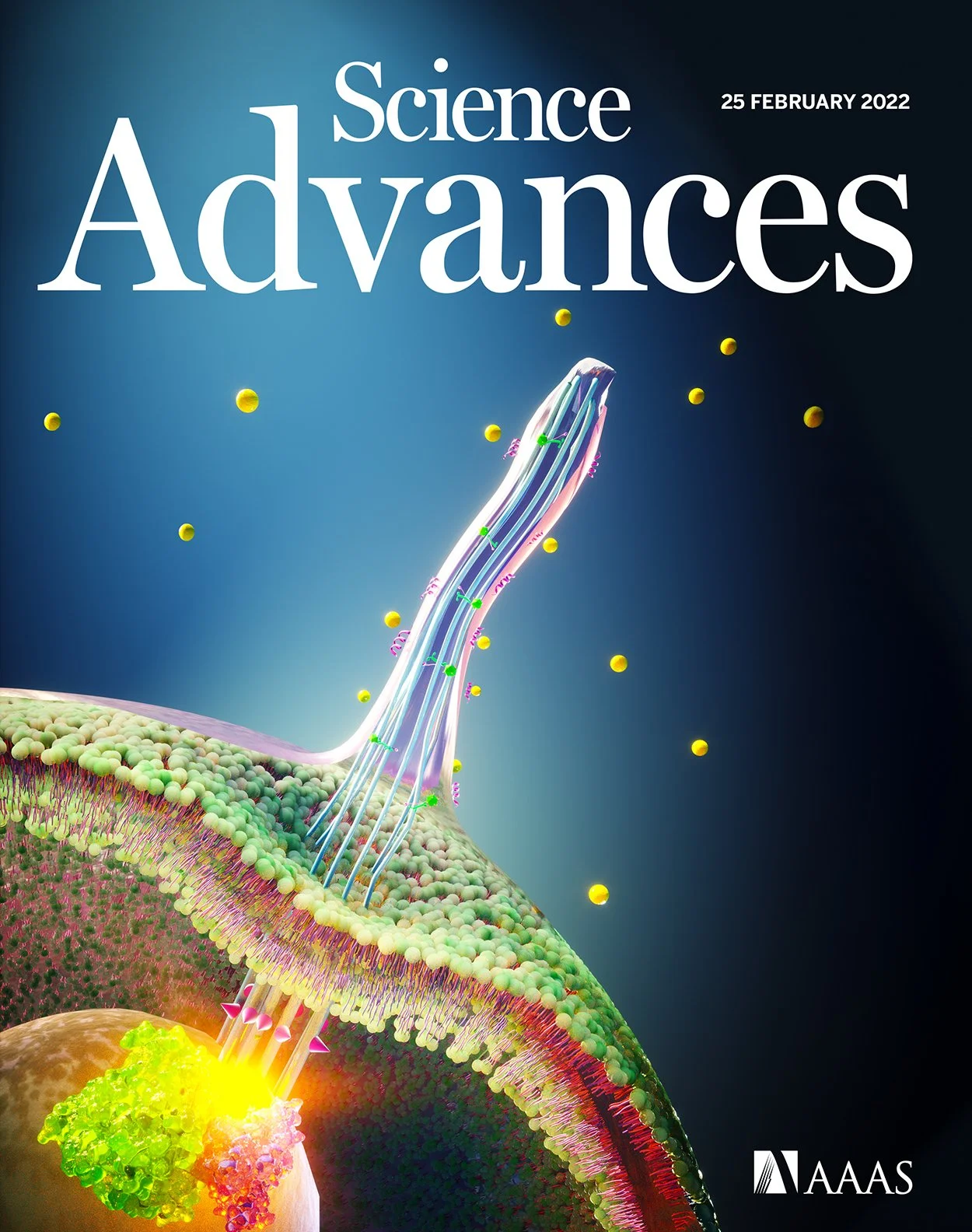
In vivo mRNA delivery to virus-specific T cells by light-induced ligand exchange of MHC class I antigen-presenting nanoparticles
Simultaneous delivery of mRNA to multiple antigen-specific T cells remain challenging. We developed antigen-presenting nanoparticles capable of delivering mRNA in vivo selectively to multiple virus-specific T cell populations.
-
![]()
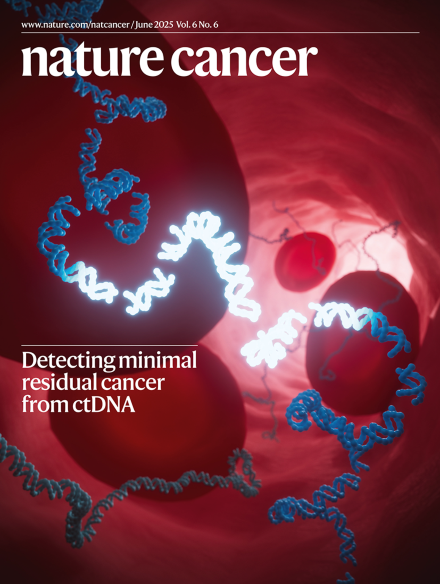
Sensitizing solid tumors to CAR-mediated cytotoxicity by lipid nanoparticle delivery of synthetic antigens
Many tumors escape CAR T cell–mediated recognition due to their similarity to normal tissues. We report the development of synthetic antigens that selectively mark cancer cells, enabling their targeted eradication by CAR T cells engineered against these antigens.
-
![]()
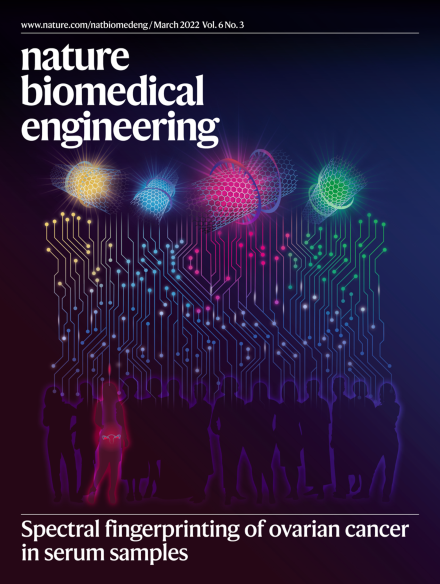
Urinary detection of early responses to checkpoint blockade and of resistance to it via protease-cleaved antibody-conjugated sensors
Although immune checkpoint inhibitors have achieved significant clinical success, therapeutic responses remain limited to a subset of patients. To address this challenge, we developed a novel class of immune checkpoint inhibitors integrated with protease sensors for early, noninvasive monitoring of treatment response.
Develop precision immunotherapy
-
F. Y. Su (Corresponding author)
-
F. Y. Su*, J. C. Siebart*, C. S. Chan*, M. Y. Wang, X. Yao, A. S. Trenkle, A. Sivakumar, M. Su, R. Harandi, N. Shahrawat, C. H. Nguyen, A. Goenka, J. Mun, M. V. Dhodapkar, G. A. Kwong.
In vivo engineering of immune cells holds great promise for treating human disease, yet efficient and selective delivery of genetic material to disease-relevant cells remains a major challenge. Here, we design antigen-presenting lipid nanoparticles (APNs) to enable two orthogonal therapeutic strategies—reprogramming or depleting antigen-specific T cells in vivo—for cancer CAR T cell therapy and prevention of autoimmune type 1 diabetes.
-
F. Y. Su, Q. Zhao, S. N. Dahotre, L. Gamboa, S. S. Bawage, A. D. Silva Trenkle, A. Zamat, H. Phuengkham, R. Ahmed, P. J. Santangelo, G. A. Kwong.
Simultaneous delivery of mRNA to multiple antigen-specific T cells remain challenging. We developed antigen-presenting nanoparticles capable of delivering mRNA in vivo selectively to multiple virus-specific T cell populations.
Engineer macrophages as drug depots
-
T. Chavas*, F.Y. Su*, S. Srinivasan, D. Roy, B. Lee, S. J. Skerrett, D. M. Ratner, T. E. West, and P. S. Stayton.
Pulmonary melioidosis is a bacterial disease associated with high morbidity and mortality rates reaching up to 40% in resource-poor regions of South Asia. Current treatment regimens require multiple antibiotics administered through prolonged oral and intravenous courses, which are difficult to implement in under-resourced settings. Here, we report that a macrophage-targeted polyciprofloxacin prodrug serves as a surprisingly effective pre-exposure prophylactic in highly lethal murine models of aerosolized human pulmonary melioidosis.
-
F. Y. Su, S. Srinivasan, B. Lee, J. Chen, A. J. Convertine, T. E. West, D. M. Ratner, S. J. Skerrett, and P. S. Stayton.
Intracellular bacterial infections localized within lung alveolar macrophages (AMs) represent one of the most challenging contexts for antimicrobial therapy. Here, we describe an intracellular enzyme-cleavable polymeric prodrug that enables tailored ciprofloxacin release in the lung and within AMs, resulting in robust therapeutic efficacy against pulmonary intracellular infections.
-
F. Y. Su*, J. Chen*, H.-N. Son, A. M. Kelly, A. J. Convertine, T. E. West, S. J. Skerrett, D. M. Ratner, and P. S. Stayton.
Pulmonary intracellular infections, including tuberculosis, anthrax, and tularemia, remain major challenges for conventional antibiotic therapy. Here, we report the development of polymer-augmented liposomes (PALs) to enhance the intracellular antibacterial activity of streptomycin within alveolar macrophages.
Program tumor microenvironment
-
L. Gamboa, A. H. Zamat, C. A. Thiveaud, H. J. Lee, E. Kulaksizoglu, Z. Zha, N. S. Cambell, C. S. Chan, S. Fagrega, S. A. Oliver, F. Y. Su, H. Phengkham, D. Vanover, H. E. Peck, A. Sivakumar, S. N. Dahotre, A. M. Harris, P. J. Santangelo, G. A. Kwong.
Many tumors escape CAR T cell–mediated recognition due to their similarity to normal tissues. We report the development of synthetic antigens that selectively mark cancer cells, enabling their targeted eradication by CAR T cells engineered against these antigens.
-
B. L. C. Kinney, S. Gunti, V. Kansal, C. J. Parrish, N. F. Saba, Y. Teng, M. K. Henry, F. Y. Su, G. A. Kwong, N. C. Schmitt.
Impaired antigen presentation underlies resistance of head and neck cancers to T cell–based immunotherapy. We investigated the roles of STAT1 and p53 in regulating this process and demonstrated that rescuing NLRC5 expression can restore tumor sensitivity to immunotherapy.
-
Q. D. Mac*, A. Sivakumar*, H. Phuengkham, C. Xu, J. R. Bowen, F. Y. Su, S. Z. Stentz, H. Sim, A. M. Harris, T. T. Li, P. Qiu, G. A. Kwong.
Although immune checkpoint inhibitors have achieved significant clinical success, therapeutic responses remain limited to a subset of patients. To address this challenge, we developed a novel class of immune checkpoint inhibitors integrated with protease sensors for early, noninvasive monitoring of treatment response.